Dear Doctor I Have Read Your Play Poem Analysis
Mary Hobson: Information technology took me about two years [to read 'War and Peace']. I read it similar a poem, a sentence at a time.
Yelena Bozhkova
English author and translator Mary Hobson decided to larn Russian at the historic period of 56, graduating in her sixties and completing a PhD aged 74. Now fluent in Russian, Hobson has translated "Eugene Onegin" and other poems by Pushkin, "Woe from Wit" by Griboyedov, and has won the Griboyedov Prize and Pushkin Medal for her work. RBTH visited Hobson at home in London to ask about her inspiring experience.
RBTH: Learning Russian is difficult at whatever age, and you were 56. How did the idea first come to your mind?
Mary Hobson: I was having a human foot operation, and I had to stay in bed for two weeks in hospital. My daughter Emma brought me a big fat translation of State of war and Peace. "Mum, you'll never get a better chance to read it", she said.

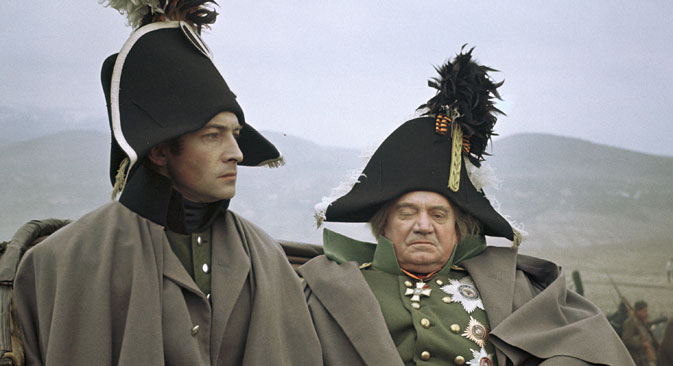
I'd never read Russian literature before. I got absolutely hooked on it, I but got so absorbed! I read like a starving man eats. The paperback didn't have maps of the battle of Borodino, I was making maps trying to understand what was happening. This was the best novel ever written. Tolstoy creates the whole world, and while you lot read it, you lot believe in it.
I woke upward in the hospital three days after I finished reading and suddenly realized: "I haven't read it at all. I've read a translation. I would have to learn Russian."
RBTH: Did y'all read War and Peace in the original language somewhen?
M.H.: Yes, it was the start thing I read in Russian. I bought a fat Russian lexicon and off I went. It took me nigh two years. I read it like a poem, a judgement at a fourth dimension. I learned such a lot, I all the same call back where I first found some words. "Between," for example. About a third of the style down the page.
RBTH: Do yous remember your showtime steps in learning Russian?
Thousand.H.: I had a plan to study the Russian language in evening classes, merely my Russian friend said: "Don't do that, I'll teach yous." We saturday in the garden and she helped me to remember the Cyrillic script. I was 56 at this fourth dimension, and I constitute it very tiring reading in Cyrillic. I couldn't do it in the evening because I only wouldn't be able to sleep. And Russian grammar is fascinating.
RBTH: Yous became an undergraduate for the commencement time in your sixties. How did you feel about studying with young students?
M.H.: I need to explain starting time why I didn't take any career before my fifties. My husband had a very serious illness, a cerebral abscess, and he became so disabled. I was but looking after him. And we had four children. After 28 years I could non do it any longer, I had suspension downs, depressions. I finally realized I would have to leave. Otherwise I would just get down with him. There was a life out there I hadn't lived. It was fourth dimension to get out and to live it.
I left him. I've been on my own for three years in a limbo of quilt and depression. So I picked upward a phone and rang the number my friend had long since given me, that of the School of Slavonic and Due east European Studies, London University. "Do you have mature students?" I asked. "Of sixty-two?" They did.
When the commencement day of term arrived, I was absolutely terrified. I went twice around Russel square before daring to get in. The only thing that persuaded me to practice it was that I got offered the identify and if I didn't practise it, the children would exist and then ashamed of me. My group mates looked a piddling bit surprised at first only then we were very quickly writing the same essays, reading the same stuff, having to do the same translations.
RBTH: You spent ten months in Moscow as part of your course. How did you feel in Russian federation?
M.H.: I hardly dared open my mouth, because I thought I got information technology incorrect. It lasted about a calendar week similar this, inappreciably daring to speak. Then I thought – I'one thousand here merely for x months. I shall die if I don't communicate. I just have to run a risk it. And so I started bumbling stuff. I said things I didn't at all mean. I just said anything. The most dangerous thing was to make jokes. People looked at me as I was mad.

I hate to say it, but in 1991 the Russian ruble absolutely collapsed and for the first and last time in my life I was a wealthy woman. I bought over 200 books in Russian, 10 "Complete Collected Works" of my favorite 19th-century authors. Then it was a problem how to get them domicile. Lxx-five of them were brought to London past a visiting group of schoolchildren. They took three books each.
RBTH: You're celebrating your 90th birthday in July. What's the secret of your longevity?
M.H.: If I had not gone to university, if I had given upwards and stopped learning Russian, I don't think I'd have lived this long. It keeps your mind active, it keeps you physically active. It affects everything. Learning Russian has given me a whole new life. A whole circumvolve of friends, a whole new fashion of living. For me information technology was the most enormous opening out to a new life.
All rights reserved past Rossiyskaya Gazeta.
Get the week's all-time stories directly to your inbox
Source: https://www.rbth.com/arts/literature/2016/04/22/learning-russian-has-given-me-a-whole-new-life_587093
0 Response to "Dear Doctor I Have Read Your Play Poem Analysis"
Post a Comment